Plan
Project Planner V3
Structured context management for AI-assisted software development — hierarchy, enrichment, work orders, automation.
projectplannerv3.comDeveloper · Researcher · AI Toolsmith
Thirty years of software. Twenty-plus research publications. Now building the tools that make AI write production-grade code.

About
Conrad Roberts is a Belgian software developer and architect with more than three decades of hands-on engineering behind him — full-stack Microsoft .NET and C# systems for enterprises, including Linux and Slackware systems, and a career-long habit of building the tooling other developers end up relying on.
In 2017 he turned that experience toward distributed finance, founding Zillion Research Labs and designing ZillionGrid, a hybrid blockchain infrastructure for real-world settlement. The research arm has published more than twenty papers, whitepapers and articles — from hybrid-chain settlement, stablecoin taxonomy and the USD $14 trillion tokenization thesis to FinTRAKS, the Federated Exchanges Network and the ZillionGrid.ai real-time settlement architecture.
An early-access seat to GPT-3 in 2020 started a second act. After years of fighting context loss and AI drift on large codebases, he engineered a fix instead of a workaround: Project Planner V3, the Context Inheritance method, and Context Workdesk — a structured discipline he calls professional AI context programming.
“I can promise you: implemented with clear instructions and planned correctly, you will be amazed at what this setup can produce. I've been blown away. Now it's your turn.”
Timeline
Newest first: AI development tooling, built on eight years of blockchain and settlement research, built on three decades of enterprise software. Open any entry for the full story.
2026 – 2027
The hands-on companion book — the 2027 Code Edition — with sample code and workshops in preparation, teaching the full methodology behind the Context Workdesk platform.
Details2026
The local-first desktop workbench for AI development — .NET 10 + Avalonia, context inheritance, deterministic plan verification, a compile guarantee on every task. “Quality code at AI speed. Every time.”
Details2026
The five-innovation method for AI-assisted development: technical specifications cascade from project level down to individual tasks, delivered through an on-prem Azure DevOps MCP server and Claude Code.
Details2026
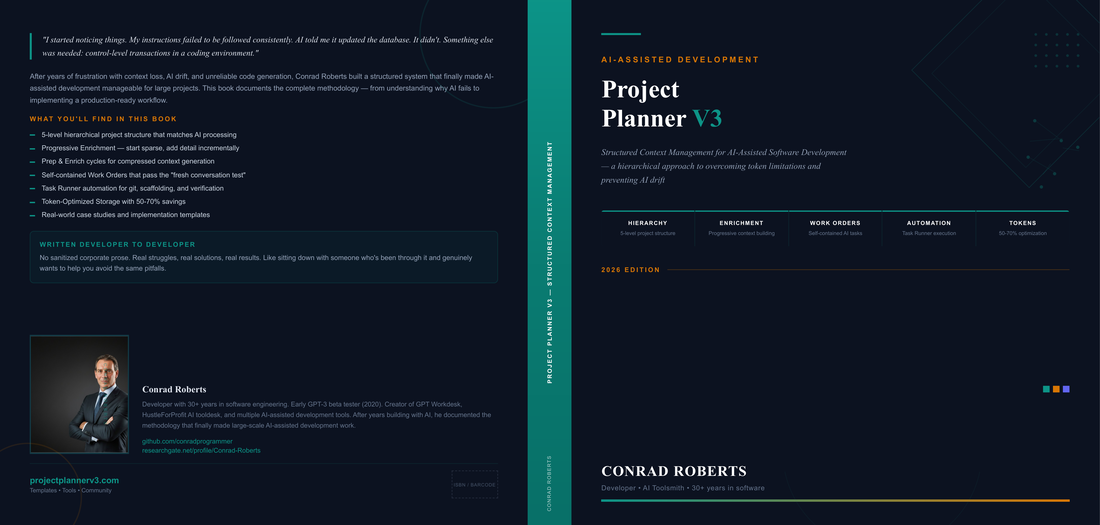
The planning system and book “Structured Context Management for AI-Assisted Software Development” — a 5-level hierarchy, progressive enrichment, self-contained work orders and 50–70% token optimization.
DetailsNov 2025
The capstone: a real-time settlement infrastructure cutting T+2 to under 15 minutes, and the Smart Order Router connecting Bloomberg-class platforms to the Federated Exchanges Network.
DetailsJul 2025
A compliance-native economic protocol for private, interoperable OTC markets — Behavioral Trust Architecture, T-LOGIC rules enforcement and NEUROTRON.ai risk intelligence across three tiers.
DetailsJul 2025
A strategic analysis of reputation-driven frameworks for dynamic capital allocation in DeFi markets — Smart Business Tokens and trust-based rules for institutional OTC exchange.
DetailsJun 2025
Ten articles in one month: tokenized capital, dual-yield systems, reputation-based trust, AI optimization, predictive models and phased funding for OTC exchanges.
DetailsAug – Oct 2024
Five publications in ninety days — from the USD $14 trillion tokenization thesis to reputation-based token value and the LiquidityFLEX dual-yield program.
DetailsFeb 2022
ZillionGrid V3's para-cluster syndetic grid, the ZillionWeb3 stack, the PoS Zillion Token Platform (ZLT), and “Stablecoins: Types and Definitions” — all published in February 2022.
DetailsDec 2021
“World Financial Networks and Blockchain Innovations powered by ZillionGrid 3.0” — inter-company settlement over blockchain networks, custom crypto, company-issued stablecoins and NFTs.
Details2020
Among the early developers granted GPT-3 access — the start of six years of daily AI-assisted development, and of cataloguing exactly where large language models break down on real projects.
DetailsMar 2019
The founding publication: a decentralized hybrid blockchain infrastructure, published as the platform itself entered public testing. First of a programme now past twenty publications.
DetailsAug 2018
The essay that set the thesis: like the Interstate System, blockchain infrastructure built ahead of demand compounds into decades of growth.
Details2017 – 2019
Designs and builds ZillionGrid, a first-of-its-kind hybrid blockchain infrastructure — PoW chains secured by ZillionCoin's ZillionFLUX algorithm, storage, APIs and an application platform — public testing in 2019.
DetailsEarly 1990s
The start of 30+ years of professional software development — growing into a full-stack Microsoft .NET / C# programmer and architect delivering enterprise systems on Windows, Linux and Slackware.
DetailsBuilding now
Plan
Structured context management for AI-assisted software development — hierarchy, enrichment, work orders, automation.
projectplannerv3.comMethod
The five-innovation method: specs cascade from project to task, so no context is ever repeated — or lost.
contextinheritance.comExecute
The local-first desktop workbench: verified plans, self-contained tasks, and a compile guarantee on every change.
contextworkdesk.comAI Toolsmith
2026 – 2027 · In progress
The definitive hands-on treatment of the discipline: nineteen chapters that take a developer from first principles of context engineering to running a full production workflow on Context Workdesk.
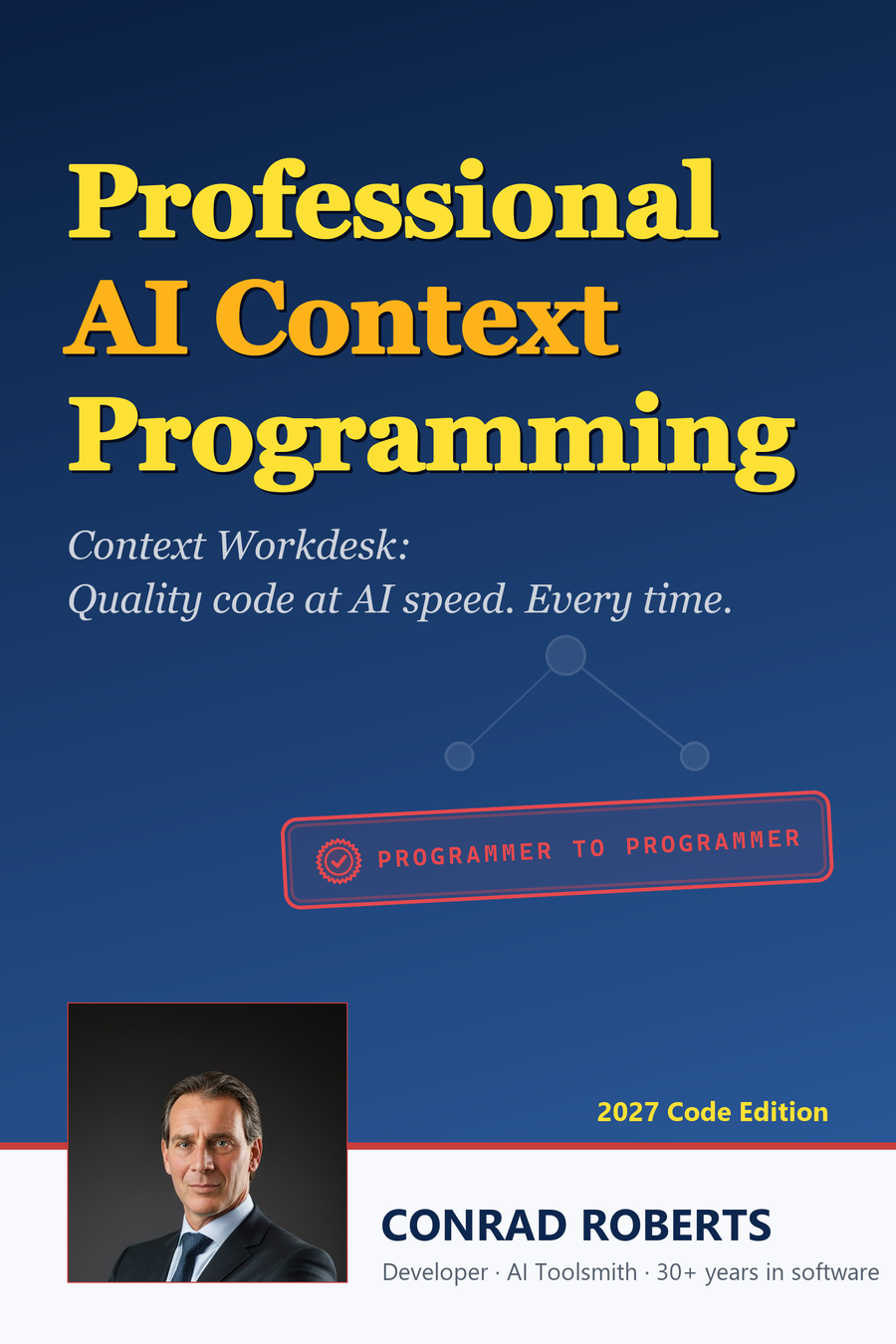
Where Project Planner V3 documented the method, the 2027 Code Edition teaches it with working code. Every chapter pairs a concept — context inheritance, plan verification, self-contained work orders, the compile guarantee — with sample projects the reader builds and breaks on their own machine.
The book anchors a broader curriculum: a workshop series is in preparation under the Context Workshops banner, aimed at teams that want to move from ad-hoc prompting to an engineering practice with measurable output quality.

AI Toolsmith
2026
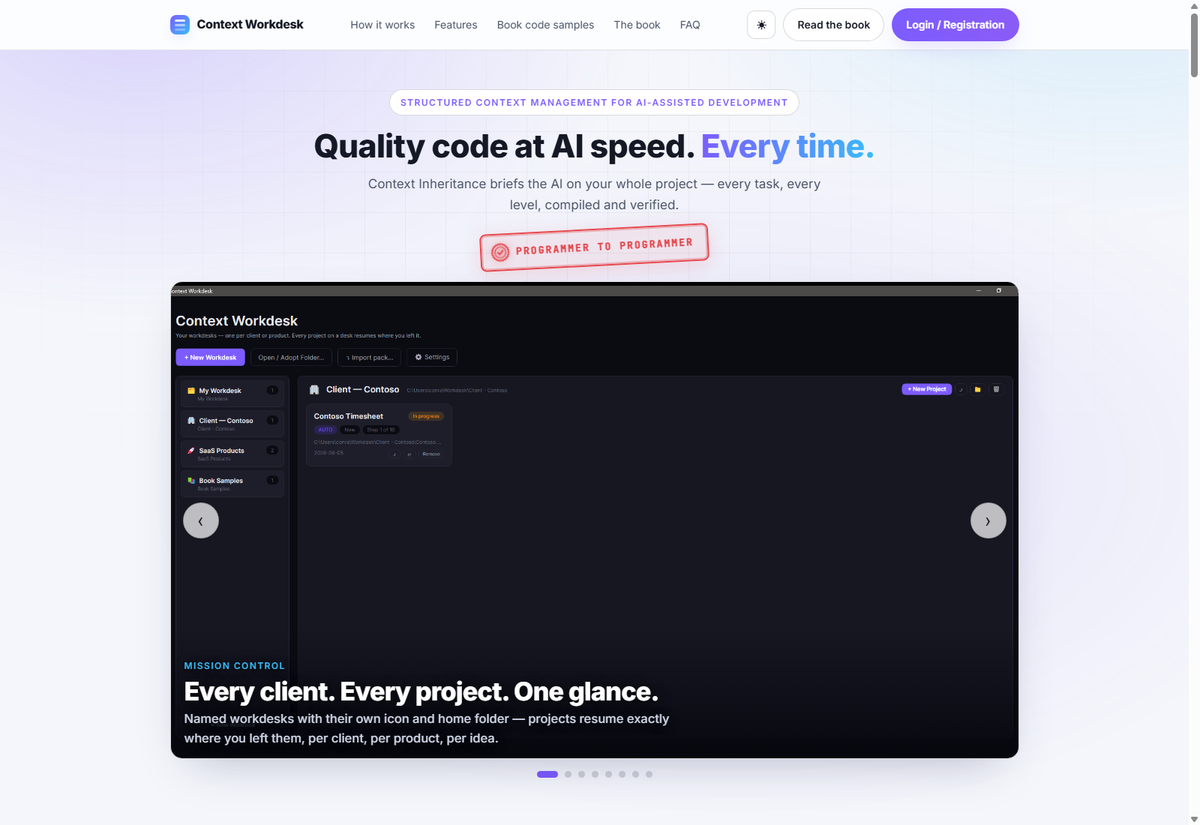
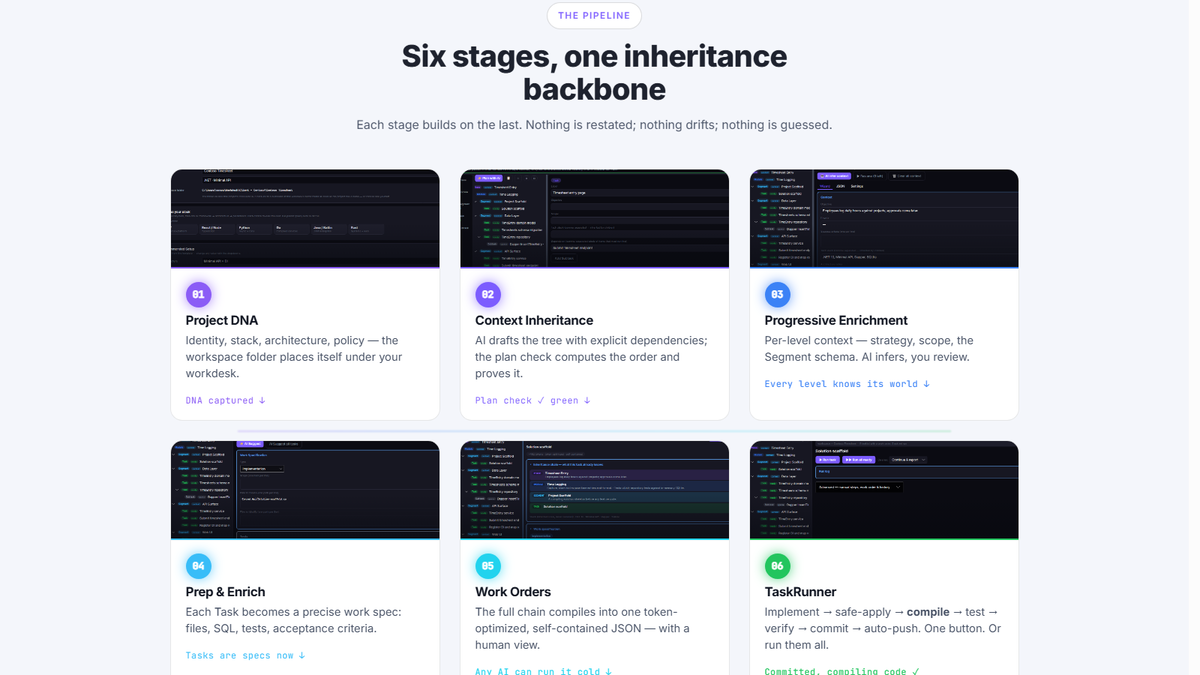
A local-first desktop workbench that treats AI code quality as a structural problem, not a prompting problem. Its promise is on the masthead: quality code at AI speed — every time.
Context Workdesk runs entirely on the developer's machine and works with any major AI provider. Technical specifications cascade from project level down to individual tasks, so no context is ever repeated or lost; dependency graphs are computed deterministically so ordering issues surface before execution, not after.
Every task ships as a self-contained work order — portable JSON that a fresh AI session can execute without any prior conversation — and every task ends with a real build step: the compile guarantee means broken code never enters version control. Entire workdesks export as sanitized .wdpack archives for sharing or backup.
AI Toolsmith
2026
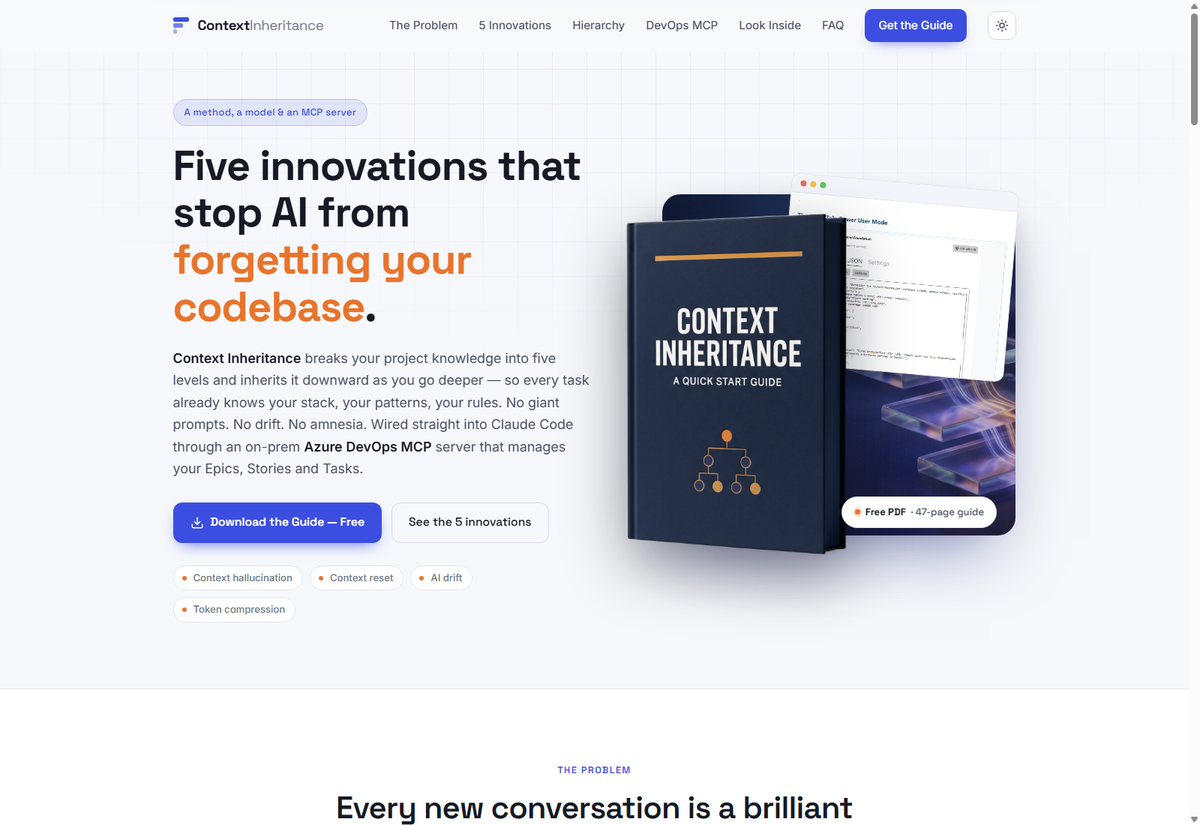
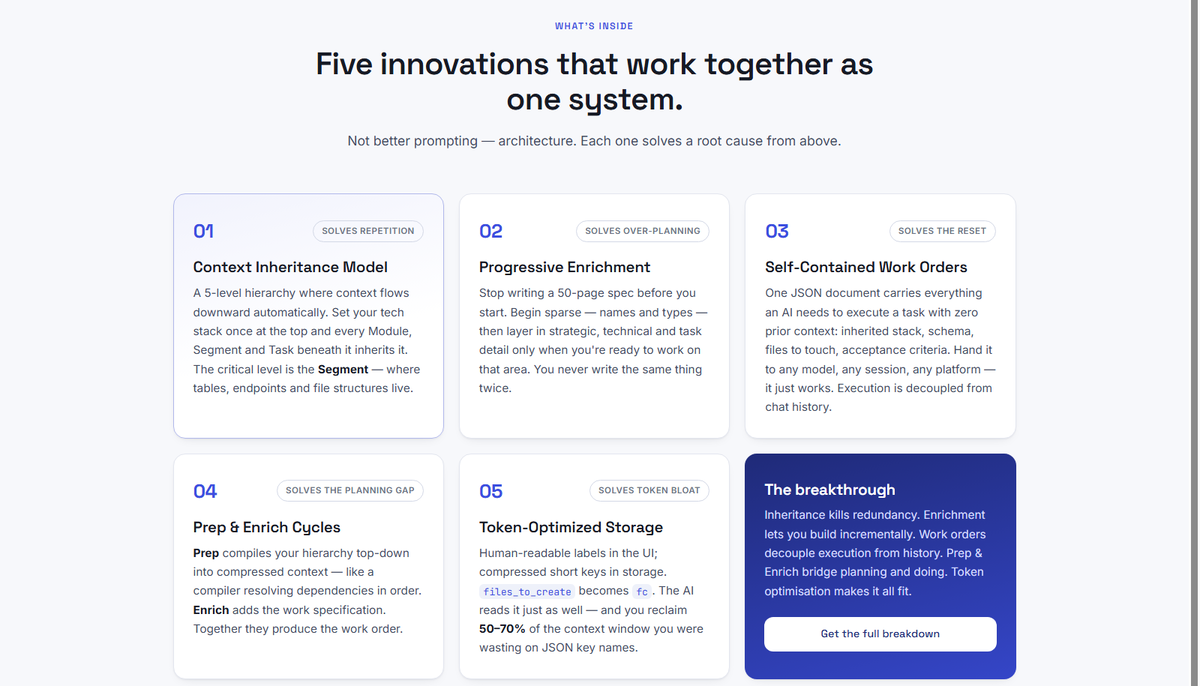
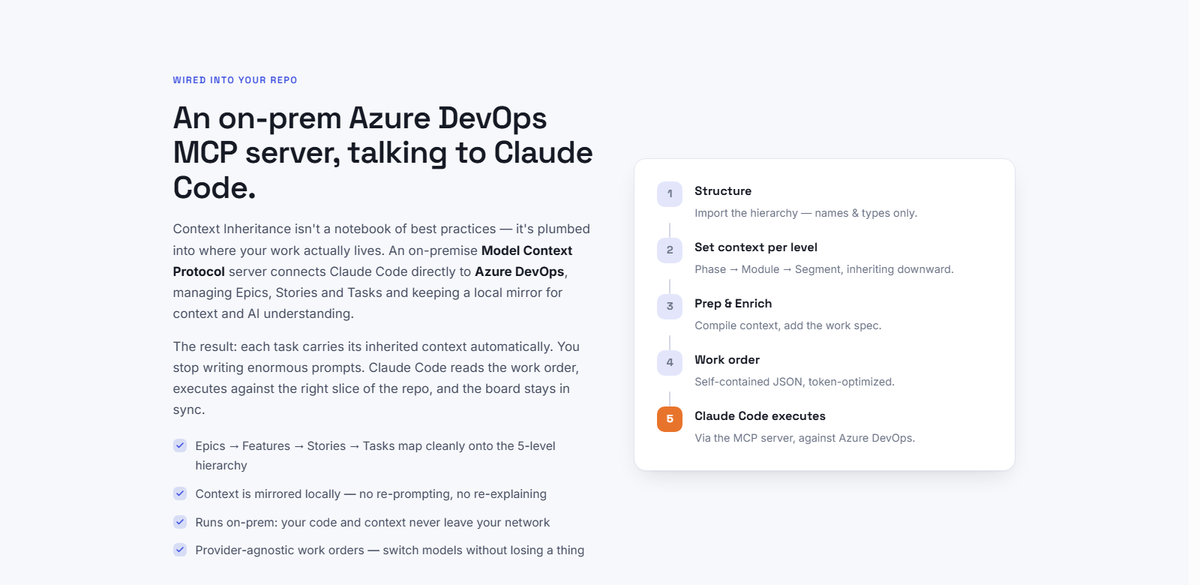
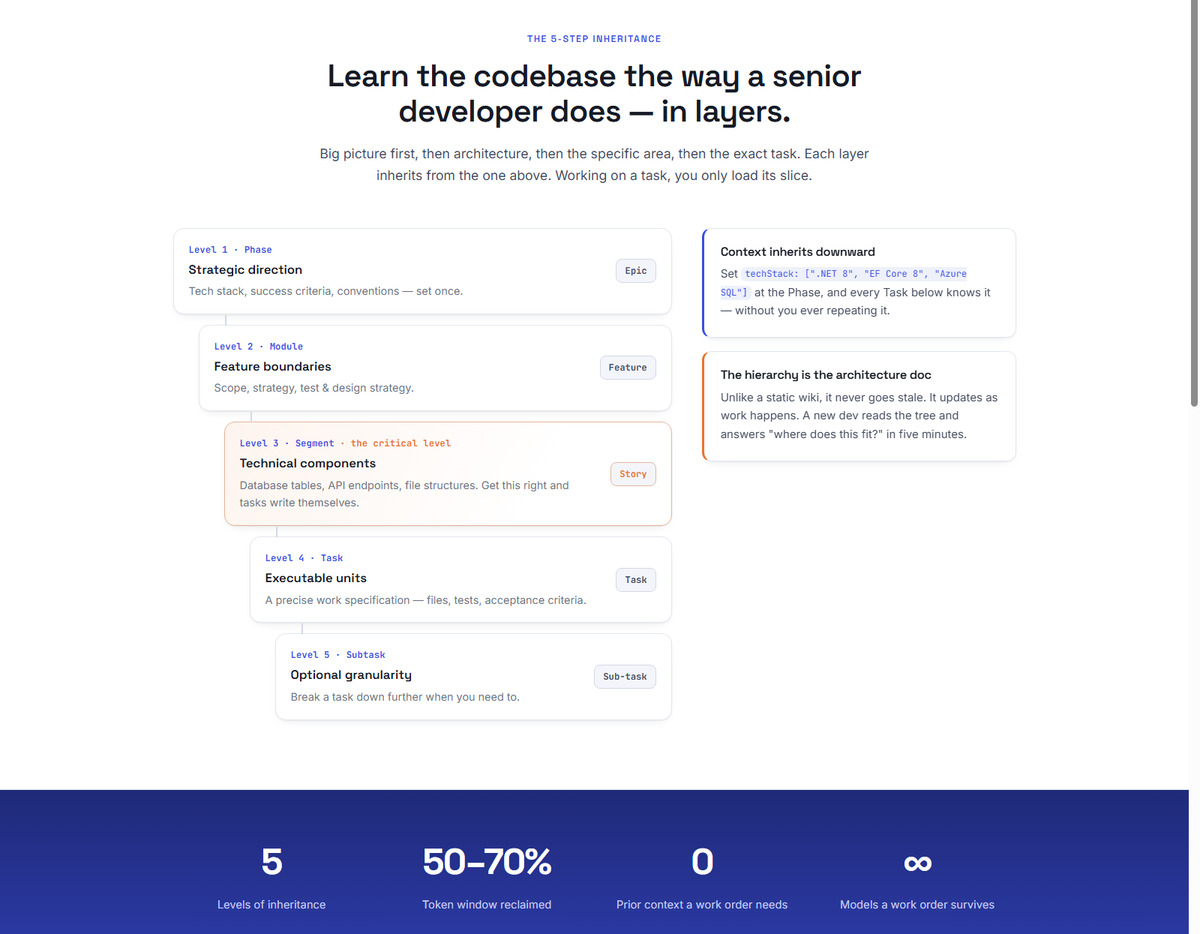
The method at the heart of the stack, formalized as five innovations: technical context cascades from project level down to every individual task — written once, inherited everywhere.
Context Inheritance answers the question every team working with AI eventually asks: why does the model keep forgetting the architecture? The method gives a project a single authoritative context tree — architecture, tech stack, naming, data and API layers defined at the top, specialized at each level below, and delivered to the AI in exactly the slice a task needs.
In production it runs through an on-prem Azure DevOps MCP server and Claude Code: work items carry their inherited context with them, so any developer — or any AI session — picks up a task with the full technical picture already in hand.
AI Toolsmith
2026
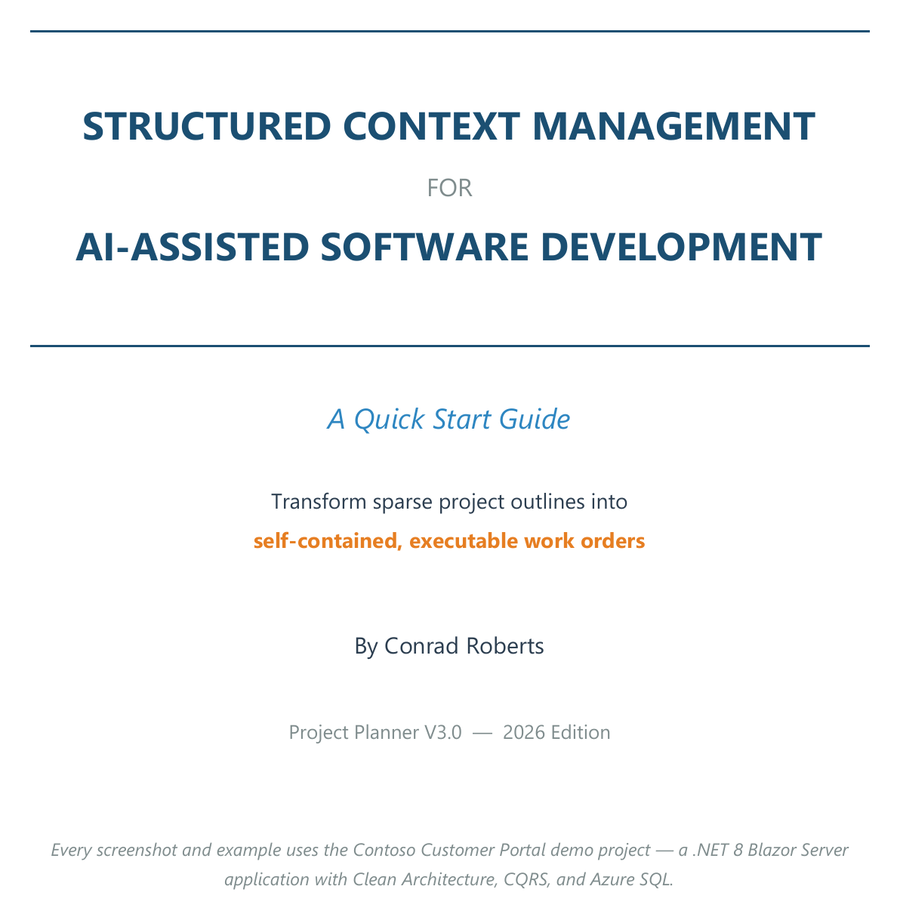
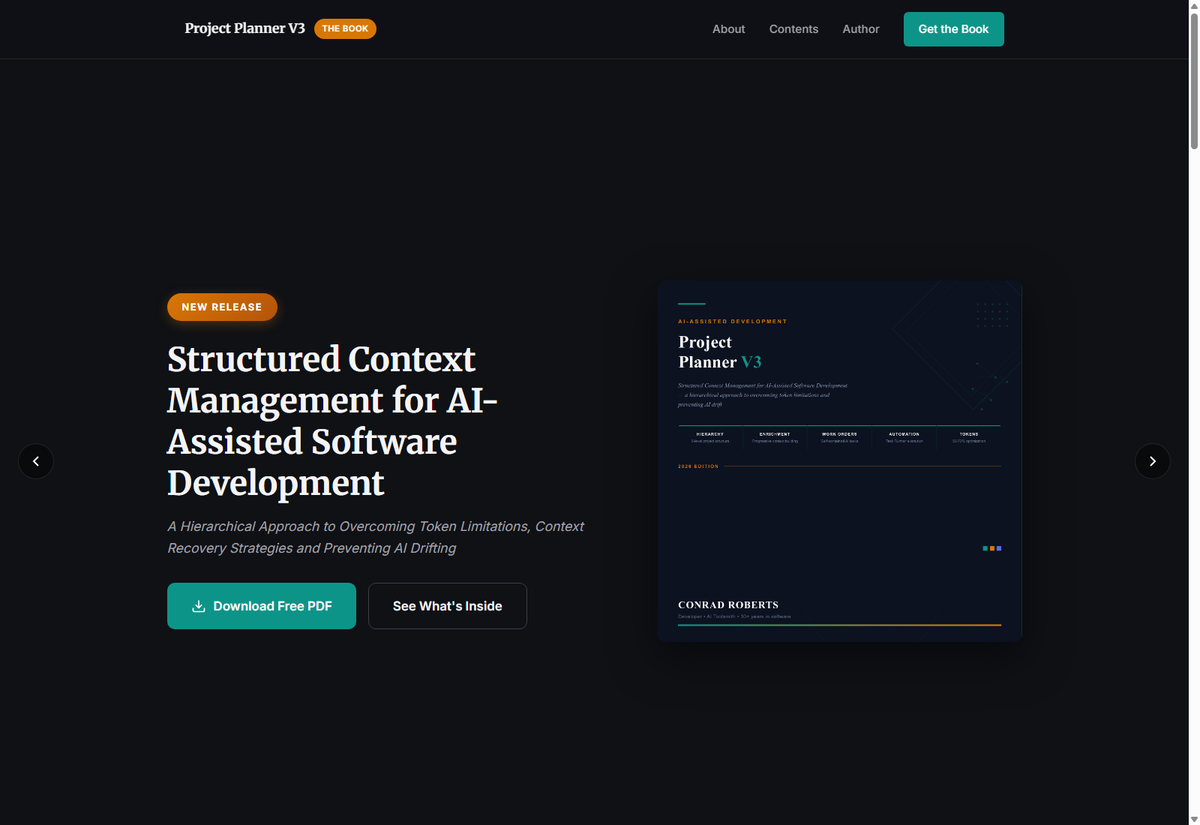
The system that made AI-assisted development manageable on large projects — and the book that documents it: Structured Context Management for AI-Assisted Software Development.
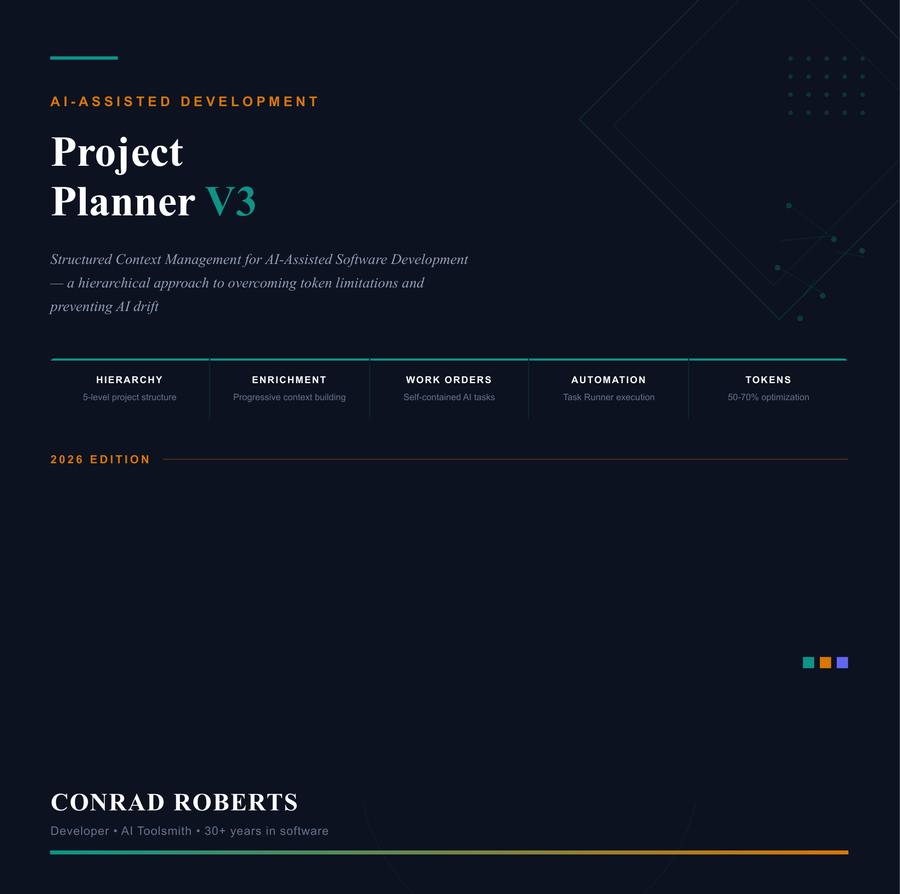
Project Planner V3 organizes a software project into a 5-level hierarchy and builds context progressively at each level. Tasks leave the planner as self-contained work orders; a Task Runner does the bookkeeping — execution, status, and the paper trail. The structure alone delivers 50–70% token optimization over conversational prompting, while eliminating the drift that creeps into long AI sessions.
The accompanying book — the 2026 Edition — walks through the full method in five parts, from the problem (“AI keeps forgetting your project”) to progressive enrichment, preparation before execution, work orders, and automation. It closes with the origin story: six years of daily AI-assisted development distilled into a system.
Blockchain Research
November 2025
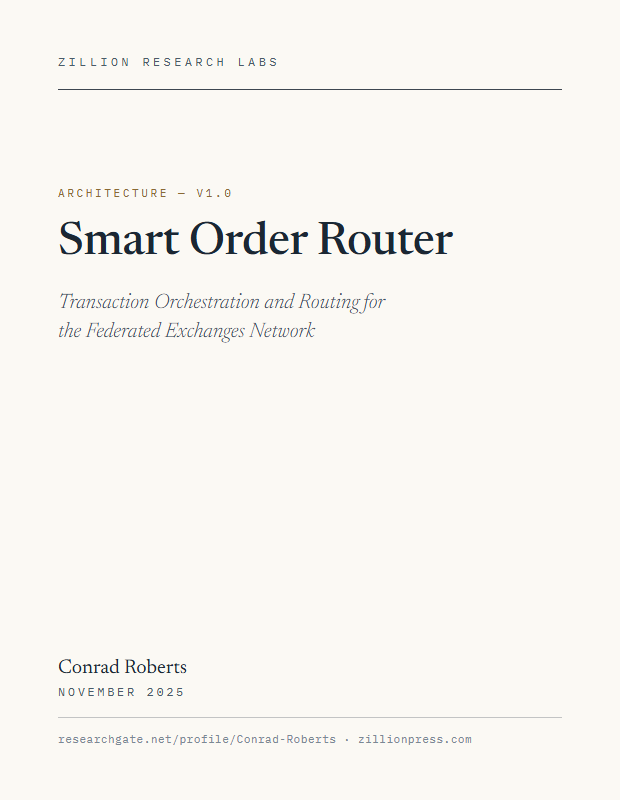
The capstone of eight years of settlement research: a whitepaper for real-time financial settlement infrastructure, and the Smart Order Router that connects Bloomberg-class platforms to it.
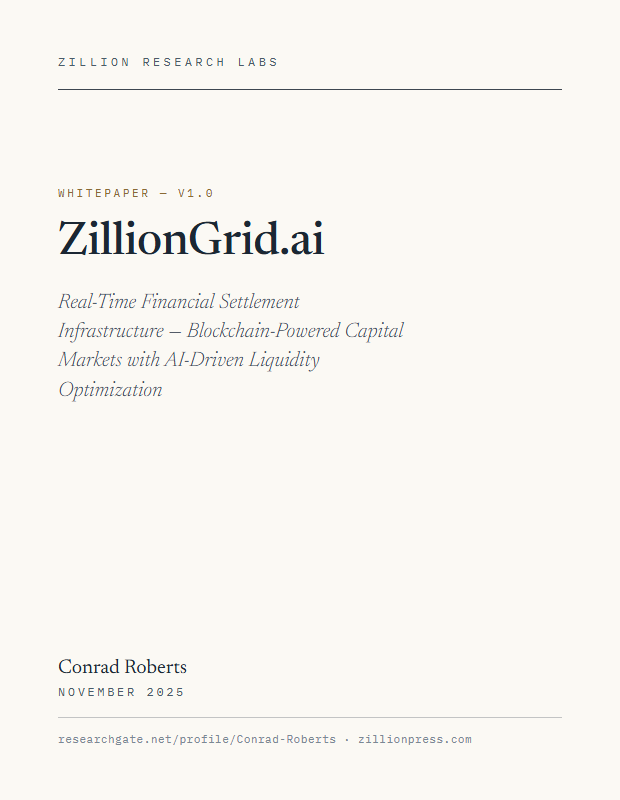
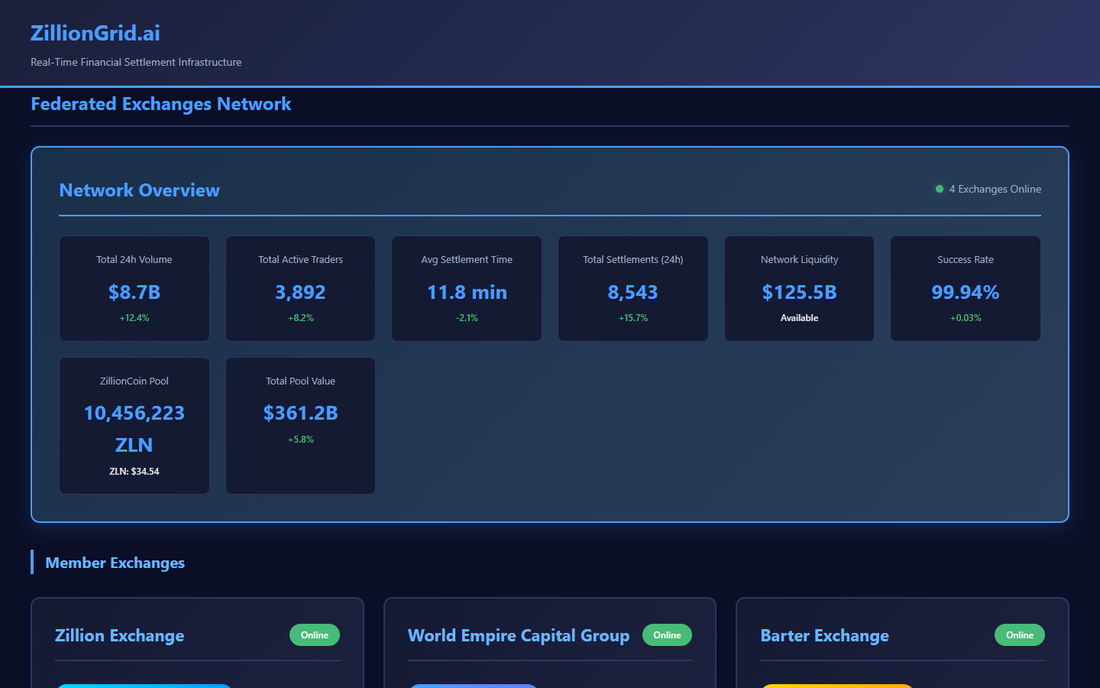
The ZillionGrid.ai whitepaper combines blockchain settlement (USDC/USDT rails on Polygon), AI-driven liquidity optimization and tokenized capital allocation into one network — collapsing traditional T+2/T+3 settlement from 24–48 hours to under fifteen minutes, while idle reserves earn dual yield instead of sitting still.
Its companion publication, the Smart Order Router (SOR) architecture, is the orchestration layer: multi-source order ingestion from Bloomberg EMSX, Refinitiv and Interactive Brokers; priority queuing by order type and trust score; and intelligent node selection across the Federated Exchanges Network by geo-proximity, capacity and trust compatibility.
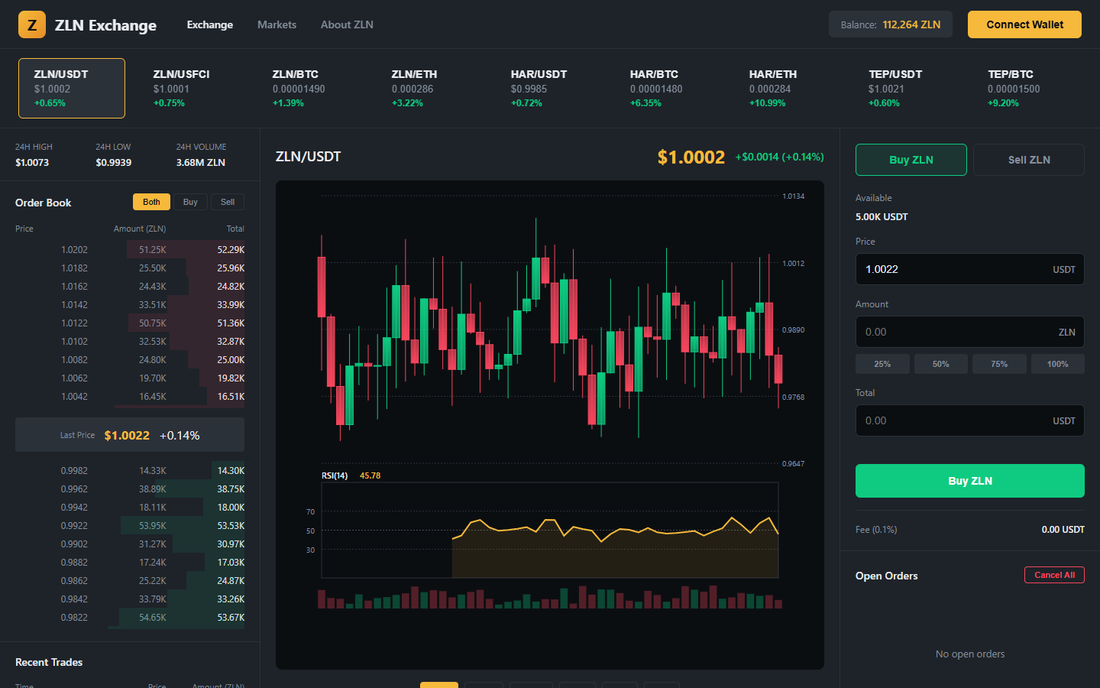
Blockchain Research
July 2025 · Whitepaper V1.0
A next-generation economic protocol for private, interoperable OTC markets — compliance-native by design, and governed by trust that participants earn rather than declare.
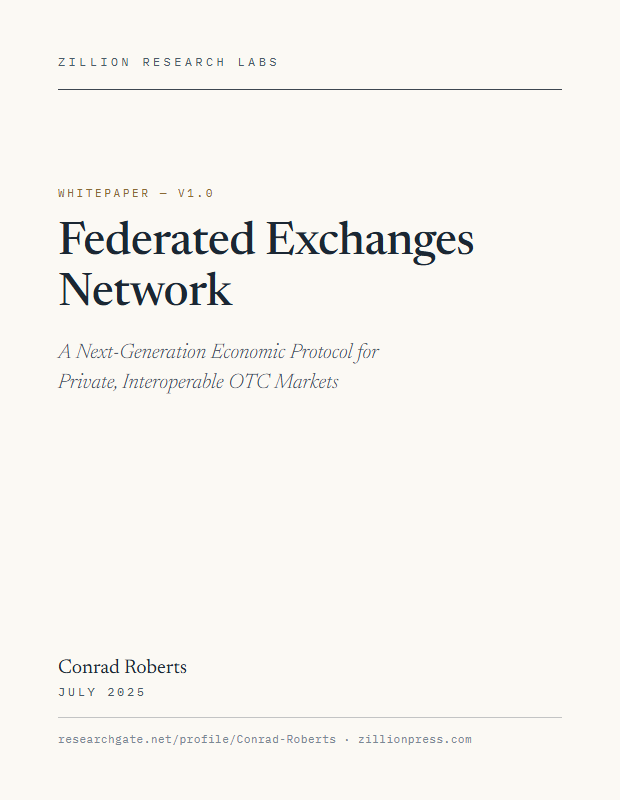
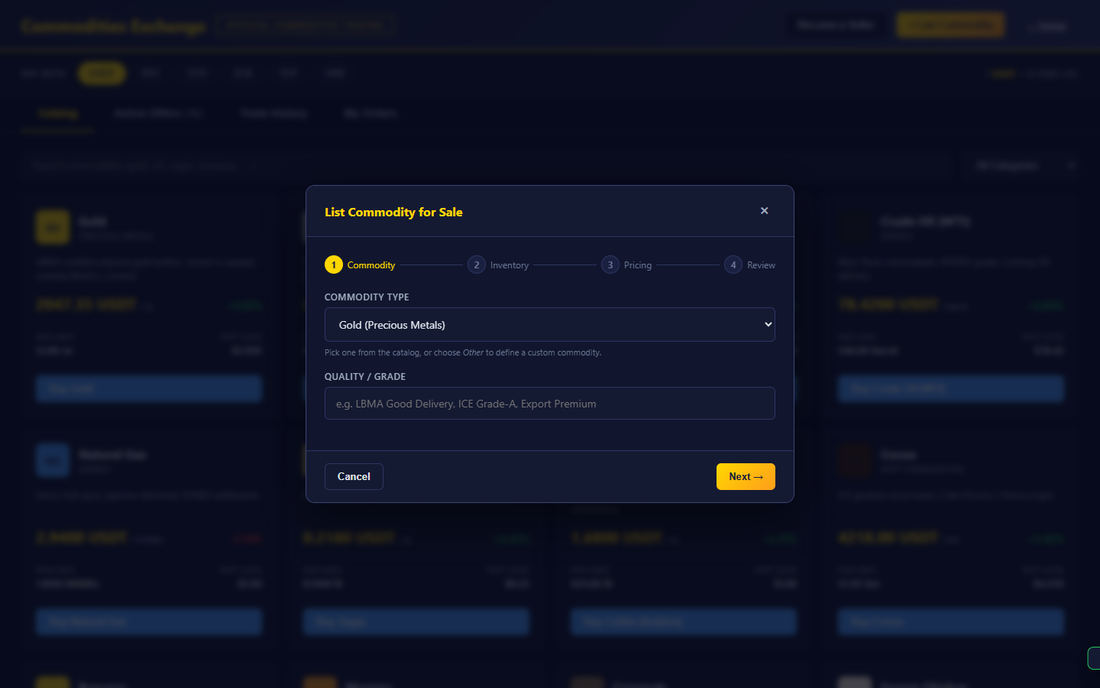
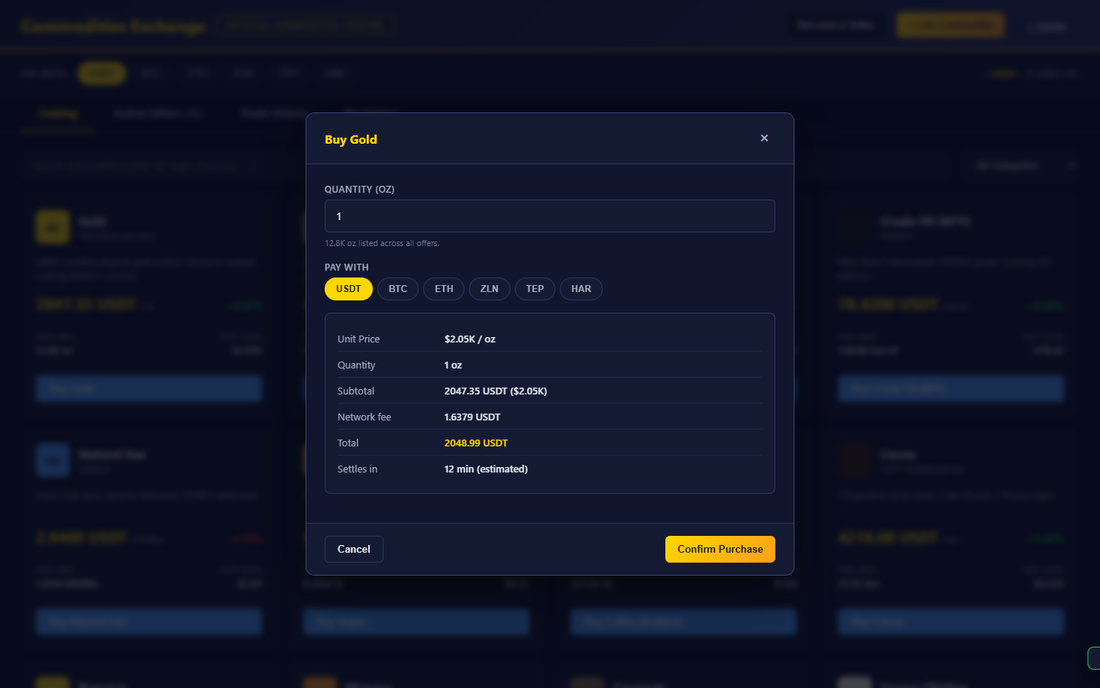
FEN bridges traditional finance and programmable capital markets through a federated, multi-tier design: FinTRAKS private OTC exchanges (invite-only, reputation-driven), BankTRAD bank-operated institutional trading nodes, and a planned public retail tier — each node sovereign, all interoperable.
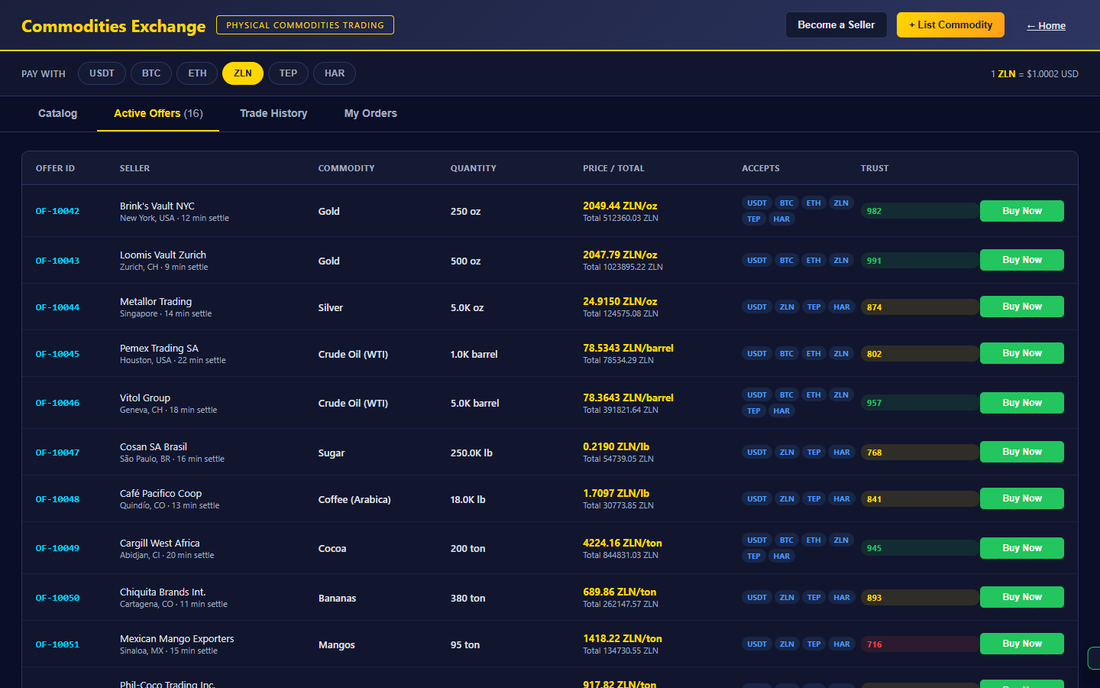
Three engineered systems govern the network. Behavioral Trust Architecture (BTA) scores verifiable behavior — milestone delivery, dispute resolution — and gates access to capital, float and redemption rights. T-LOGIC enforces the rules deterministically, and NEUROTRON.ai layers AI-enhanced risk intelligence on top. Capital itself moves as Smart Business Tokens — non-transferable, non-speculative instruments released against contract milestones, with the LiquidityFLEX engine pacing allocation.
The whitepaper aligns the whole construction with global regulatory frameworks — OCC Interpretive Letter 1184, EU MiCA, and international banking standards — making compliance a property of the architecture, not an afterthought.
Blockchain Research
July 2025
A strategic analysis of reputation-driven frameworks for dynamic capital allocation in DeFi markets — reframing who gets capital, and on what terms, around demonstrated trust.
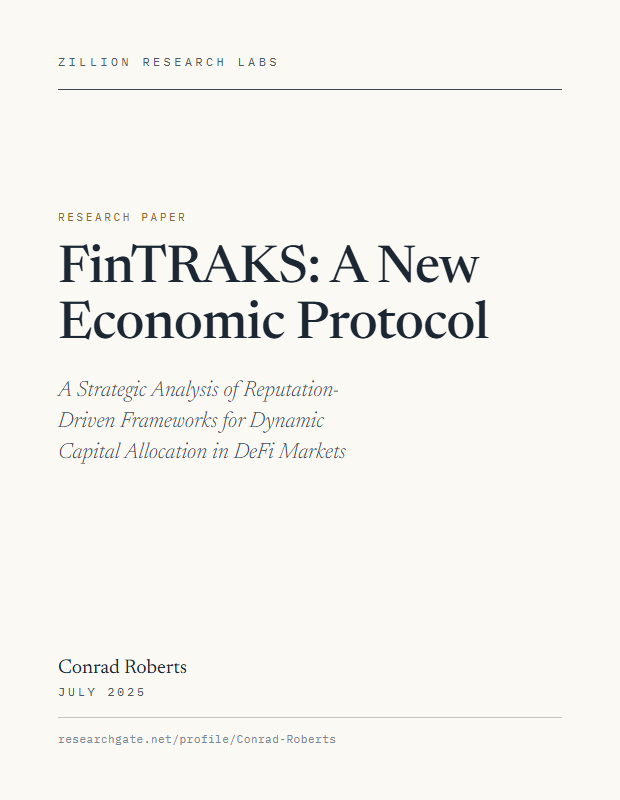
FinTRAKS — the Financial Transactions Rules and Knowledge System — replaces collateral-only thinking with reputation: Smart Business Tokens carry a participant's track record, and trust-based rules govern how capital flows to them. The paper analyzes the framework strategically, from incentive design to the institutional OTC markets it enables.
Published through Zillion Research Labs, the protocol became the first tier of the Federated Exchanges Network the same month — and the economic core of the ZillionGrid.ai settlement architecture by November.
Blockchain Research
June 2025
Ten articles in a single month, mapping where AI meets tokenized capital — the intellectual bridge between the 2024 tokenization cycle and the FEN protocol published four weeks later.
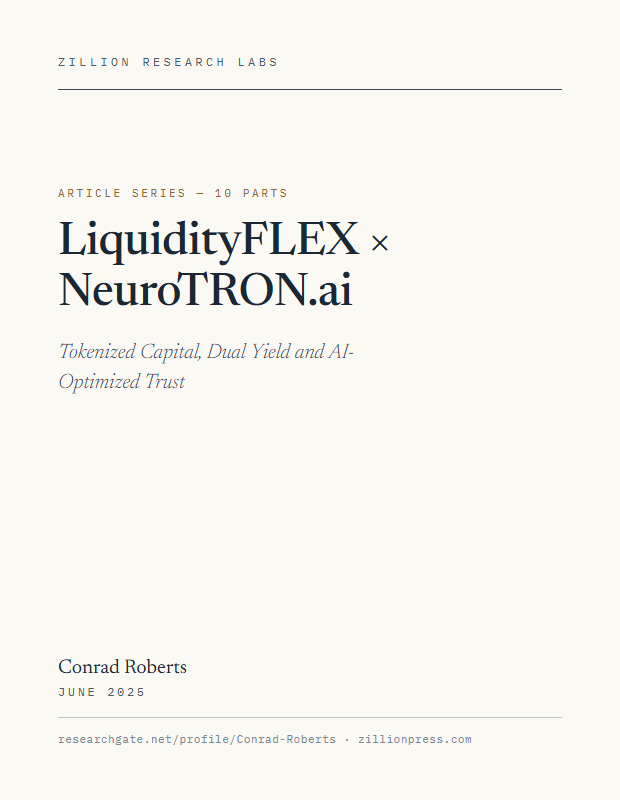
The series works through the full problem space one article at a time: tokenized capital and capital efficiency, dual-yield systems, reputation-based trust, AI optimization, risk elimination, phased funding, capital allocation, predictive models, and OTC exchange design.
Read in sequence, it is the public design notebook for NEUROTRON.ai — the AI risk-intelligence layer that appears fully formed in the Federated Exchanges Network whitepaper the following month.
Blockchain Research
August – October 2024
Five publications in ninety days, building one argument: real-world asset tokenization is a fourteen-trillion-dollar shift, and it needs capital allocation technology that doesn't exist yet.
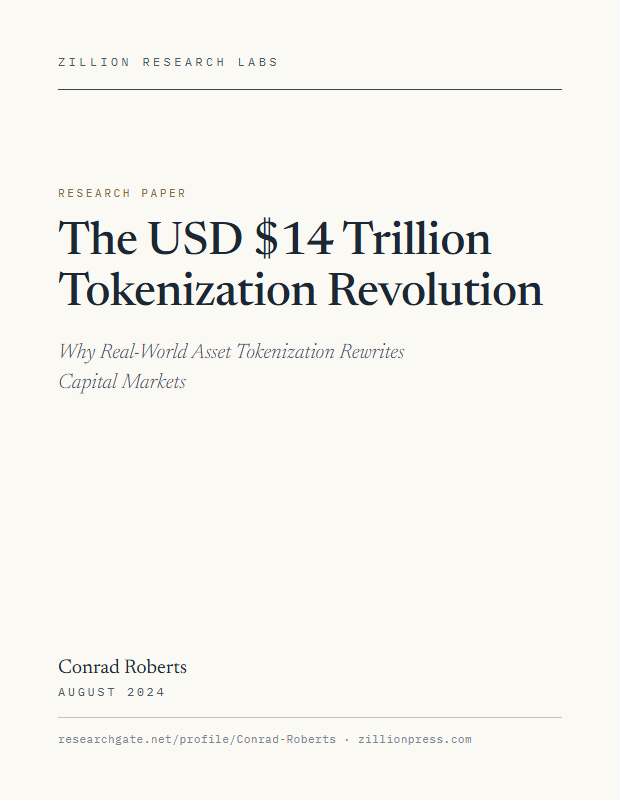
The cycle opens in August with theory — “Tokenized Strategic Capital Allocation” and “The USD $14 Trillion Tokenization Revolution” — sizing the shift and framing performance-gated capital. September turns to mechanism: solving liquidity challenges with the Zillion Accelerator Network's strategic liquidity allocation technology, and maintaining token value on private OTC exchanges through a reputation-based scoring system.
October ships the product of it all: “LiquidityFLEX — Generate Yield on Your Capital: Twice!”, the tokenized strategic capital and liquidity allocation program, published as an eBook on ResearchGate. Every concept FEN later formalizes — reputation gating, phased funding, dual yield — appears here first.
Blockchain Research
February 2022
February 2022: the ZillionGrid V3 para-cluster architecture, the ZillionWeb3 stack, the PoS Zillion Token Platform, and the stablecoin taxonomy — an entire platform generation, documented in thirty days.
The V3 whitepaper redesigned ZillionGrid around a para-cluster syndetic grid — parallel segments that let settlement scale horizontally while each cluster keeps the security properties of the underlying hybrid chains. It became the architectural reference for everything through to ZillionGrid.ai.
ZillionWeb3 specified the user-facing stack — proof-of-stake, staking, a web wallet, a domain name system, swap engine and decentralized exchange — while the PoS Zillion Token Platform (ZLT) paper covered custom tokens, smart contracts and NFTs on the grid.
“Stablecoins: Types and Definitions” did the quieter, foundational work: a clean taxonomy of stablecoin designs — from fiat-backed to algorithmic — at a moment when the industry badly needed shared vocabulary. It remains among the most-read papers on the profile.
Blockchain Research
December 2021
How companies could settle with each other directly — over blockchain networks, custom crypto, company-issued stablecoins and NFTs — using ZillionGrid 3.0 as the connective fabric.
The paper examined inter-company settlement end to end: the methods available, the risks each carries, and where distributed infrastructure genuinely improves on correspondent banking rather than merely mirroring it. Company-issued instruments — from stablecoins to NFT-represented obligations — are treated as first-class settlement assets.
It marked the shift in the research programme from building infrastructure to designing the financial networks that run on it — the thread that leads through the 2024 tokenization cycle to FinTRAKS, FEN and ZillionGrid.ai.
Blockchain Research
2020
An early-access seat to GPT-3 in 2020 — and the beginning of six years of daily AI-assisted development that would eventually redirect an entire career.
What started as curiosity became a discipline: using the model on real production codebases, day after day, and keeping careful notes on exactly where it broke down — forgotten architecture, drifting conventions, context that evaporated between sessions.
Those notes became a catalogue of failure modes, and the catalogue became a thesis: the problems were structural, so the fix had to be structural too. Project Planner V3, Context Inheritance and Context Workdesk are that thesis, engineered.
Blockchain Research
March 2019
ZillionGrid — Version 1, Phase 1: a decentralized hybrid blockchain infrastructure, published as the platform itself entered public testing.
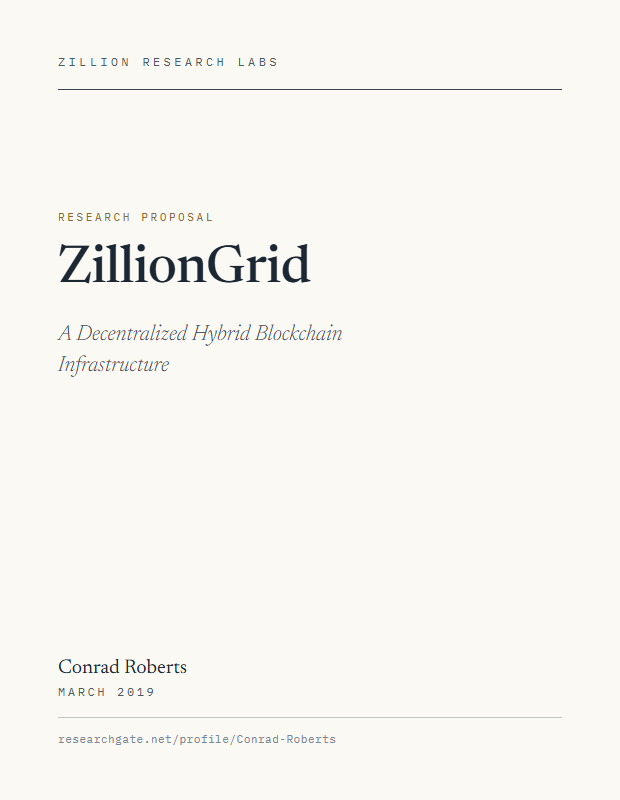
The whitepaper formalized what had been built since 2017: a hybrid architecture pairing proof-of-work-secured chains with grid infrastructure for data, file storage and applications — a deliberate departure from the single-chain orthodoxy of the time.
It opened a research programme that now spans settlement networks, stablecoin taxonomy, tokenized capital, reputation-driven economic protocols and federated exchange design — publishing through ResearchGate, ZillionPress and ZillionAcademy.
Blockchain Research
August 2018
The essay that set the thesis for everything after it: infrastructure built ahead of demand doesn't just serve an economy — it creates one.

The Federal-Aid Highway Act authorized the Interstate System before the traffic existed to justify it — and reshaped American commerce for half a century. The essay argued blockchain infrastructure sits at the same moment: build the settlement highways first, and the markets follow.
Written a year into the ZillionGrid build, it reads today as the programme's founding document — the reason the work started with infrastructure rather than applications, and kept adding lanes for seven years.
Blockchain Research
2017 – 2019
Two years of building culminating in a first-of-its-kind hybrid blockchain infrastructure — designed, implemented, and released for public testing in 2019.
ZillionGrid combined what the industry treated as separate concerns: proof-of-work chains secured by ZillionCoin's ZillionFLUX algorithm (CPU-minable, with in-wallet functionality), data and file storage behind a Universal API, and a Software Factory of turnkey solutions — one integrated infrastructure instead of a patchwork of protocols.
Zillion Research Labs grew around it as both engineering organization and research imprint — publishing through ResearchGate, ZillionPress and ZillionAcademy, and evolving the platform through V3, the Federated Exchanges Network and ultimately ZillionGrid.ai.
Software Foundations
Early 1990s
Three decades before “AI toolsmith” was a job description, the foundation was laid the only way it can be: shipping software, year after year, for people who depended on it.
The career grew with the Microsoft stack itself — from early Windows development into full-stack .NET and C#, database design, and enterprise architecture — and never stayed inside one ecosystem: enterprise systems shipped on Linux and Slackware alongside Windows. Along the way came the habit that defines everything since: when the tooling doesn't exist, build it.
That instinct — thirty years of it — is why the AI era's hardest practical problem, making models reliable on large real codebases, got answered with engineered systems rather than prompt folklore.